Drywall work
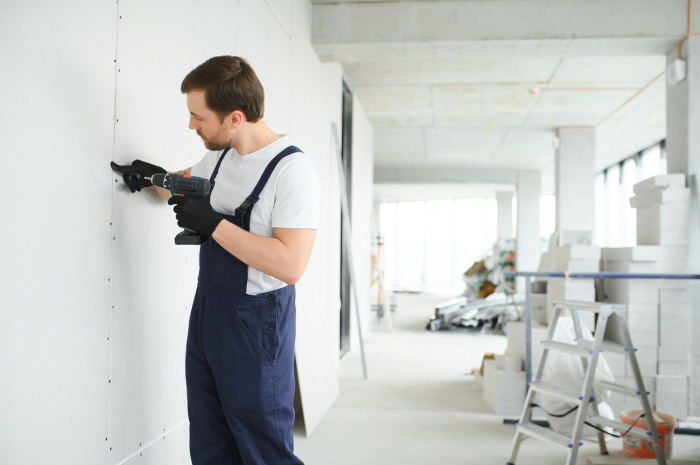
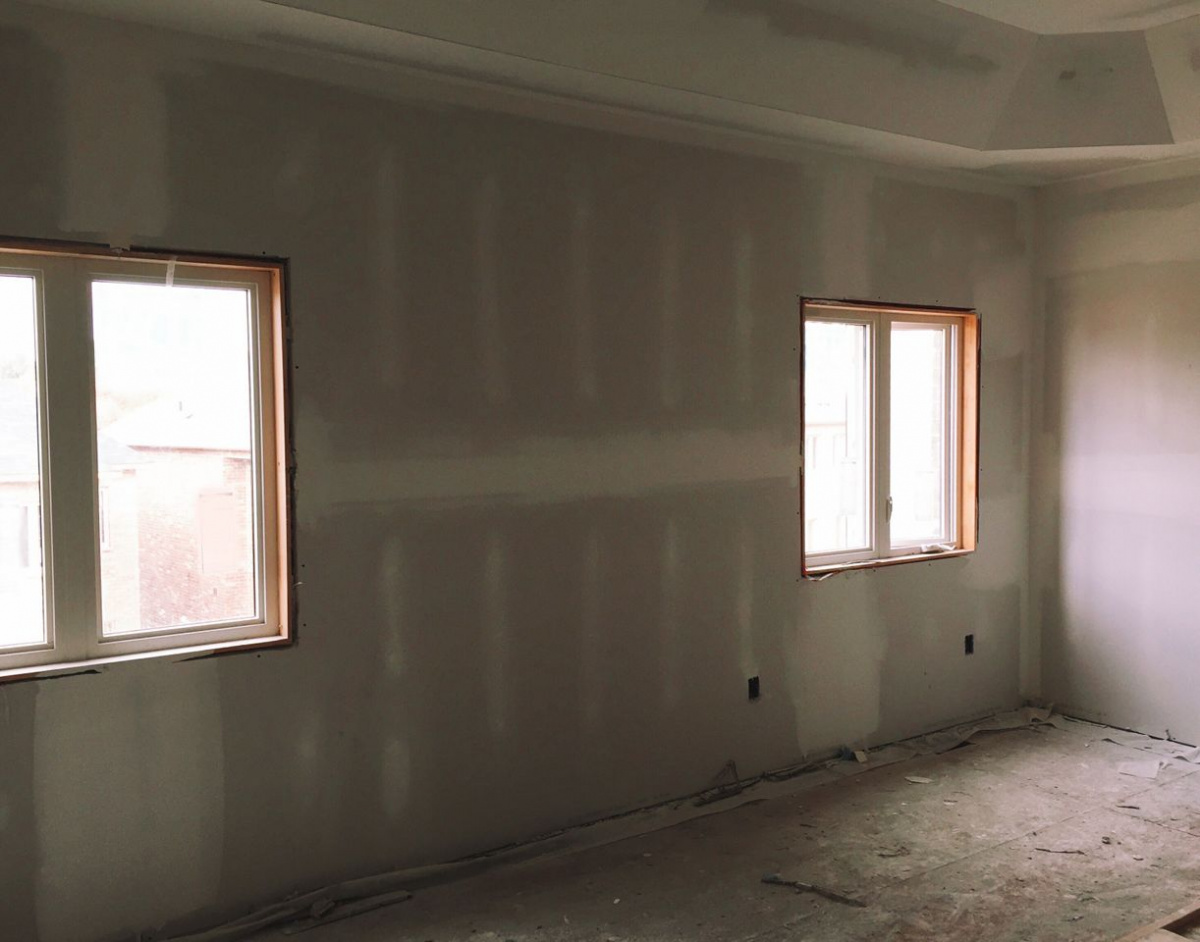
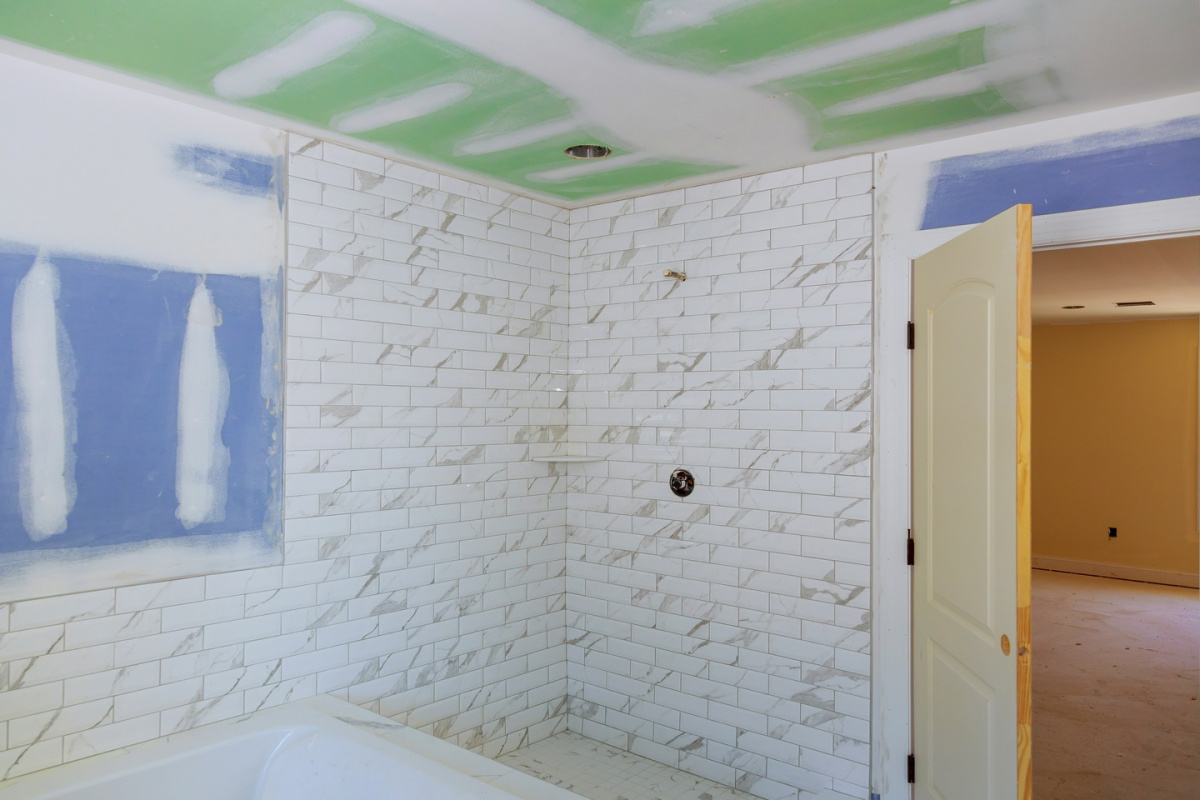
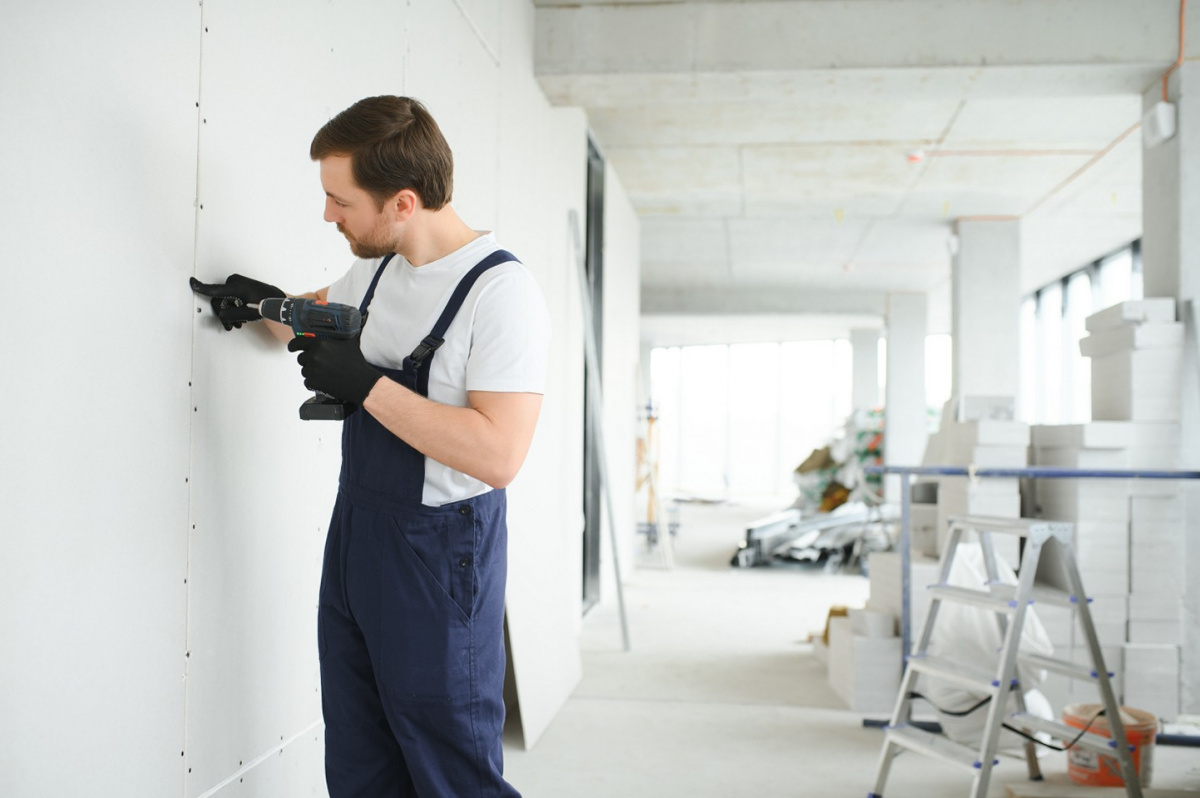
For the optimal partitioning of rooms, for suspending ceilings, and for preparing the final floor covering, we use proven drywall solutions. In implementation, there are hardly any limits to your imagination, as drywall offers a wide range of design possibilities – from simple wall constructions to complex room-in-room systems.
Innovative drywall solutions for optimal interior design
When it comes to designing living and working spaces that are functional and aesthetically pleasing, drywall solutions offer a wide range of possibilities. Drywall construction is a technique in which building components made from prefabricated parts are assembled without the use of mortar or concrete. This method has proven particularly effective for the optimal division of rooms, for suspending ceilings, and for preparing the final floor covering. A key advantage of drywall construction is that it is incredibly flexible and offers a broad spectrum of design options. From simple wall structures to complex room-in-room systems – creativity is hardly limited.
Versatility of drywall construction
The versatility of drywall construction is one of its greatest strengths. Thanks to the various materials and systems available, individual wishes and needs can be implemented exceptionally well. Plasterboard panels, metal profiles, dry screed, and acoustic ceilings are just some of the components used in this field. These materials are not only lightweight and easy to handle, but also highly adaptable. Whether you want to create a functional partition wall in an office, install a suspended ceiling for better acoustics, or create a complex, multifunctional room-in-room area – drywall solutions provide the right tool for the job.
Simple wall structures
A common application of drywall construction is simple wall structures. These partition walls can be installed quickly and efficiently and offer an excellent way to divide rooms or create new rooms. The wall structures can be modified almost as desired, for example by installing doors and windows or integrating services. Plasterboard panels mounted on metal or timber profiles are particularly popular here because they are lightweight yet stable. In addition, they offer excellent sound insulation and thermal insulation properties, which is especially beneficial in living and working areas.
Complex room-in-room systems
For more complex requirements, room-in-room systems are an ideal solution. Such constructions are often used in offices, schools, or even in residential areas to create separate rooms within a larger room. These systems consist of a combination of walls, ceilings, and floors and can be installed completely independently of the rest of the building. This makes it possible, for example, to create soundproof offices, meeting rooms, or private retreats in open-plan living areas. Thanks to the modular design, such a room-in-room area can also be dismantled easily and rebuilt elsewhere.
Suspending ceilings
Drywall solutions are also used for suspending ceilings. Suspended ceilings are not only an aesthetic enhancement; they also offer numerous functional advantages. For example, they can help improve the acoustics in a room or ensure even lighting. In addition, they provide a practical way to conceal technical installations such as ventilation and air-conditioning systems, cables, or lighting systems. Suspended ceilings usually consist of plasterboard panels that are fixed to a substructure made of metal profiles. This construction can be individually adapted to the conditions of the room and enables flexible and fast installation.
Preparation of the final floor covering
Another important aspect of drywall construction is the preparation of the final floor covering. Dry screeds are a proven solution in this context. They consist of prefabricated elements that are laid on the floor and provide a stable and level base for the final floor covering. Dry screeds are not only quick and easy to lay, they also offer excellent thermal and sound insulation properties. In addition, they can be walked on immediately after installation, which significantly shortens construction time. Whether tiles, parquet, laminate, or carpet – the final floor covering can be applied directly onto the dry screed.
Conclusion
The possible applications in drywall construction are virtually inexhaustible. From simple wall structures and suspended ceilings to complex room-in-room systems and the preparation of the final floor covering – drywall solutions provide the right answer for every construction challenge. Thanks to the versatility and flexibility of drywall construction, individual room concepts can be implemented quickly and efficiently. There are hardly any limits to your imagination: let your creativity run free and make use of the innovative possibilities that drywall construction offers you to design and optimize your spaces according to your ideas.